


How To Evaluate Mushroom Product Quality Before Bulk Ordering
2026-05-15 11:15Mushroom Quality Evaluation Guide
How To Evaluate Mushroom Product Quality Before Bulk Ordering
Before placing a bulk mushroom order, buyers should carefully evaluate product appearance, moisture content, aroma, impurity control, grade consistency, packaging protection, food safety documentation, and supplier quality control capability.
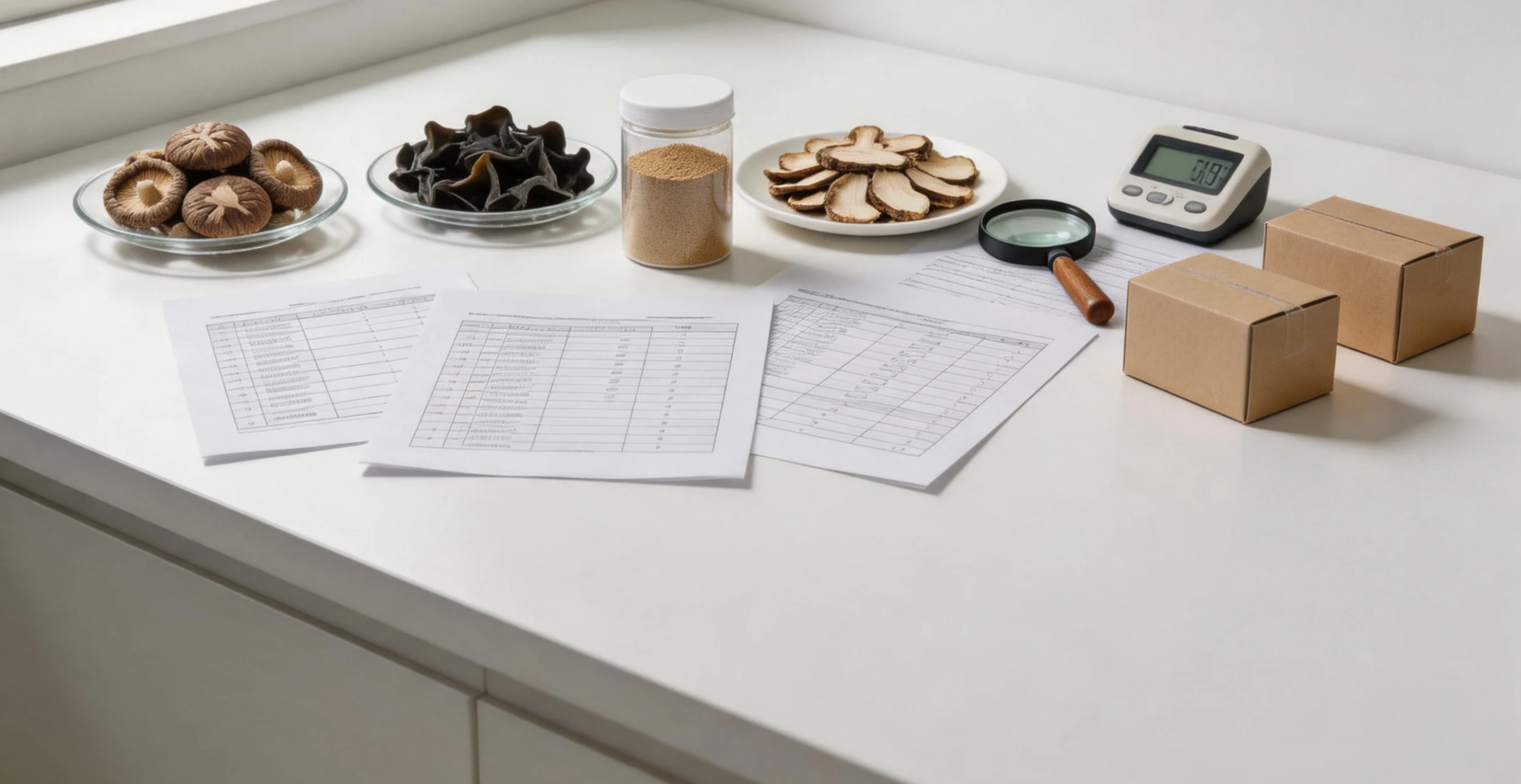
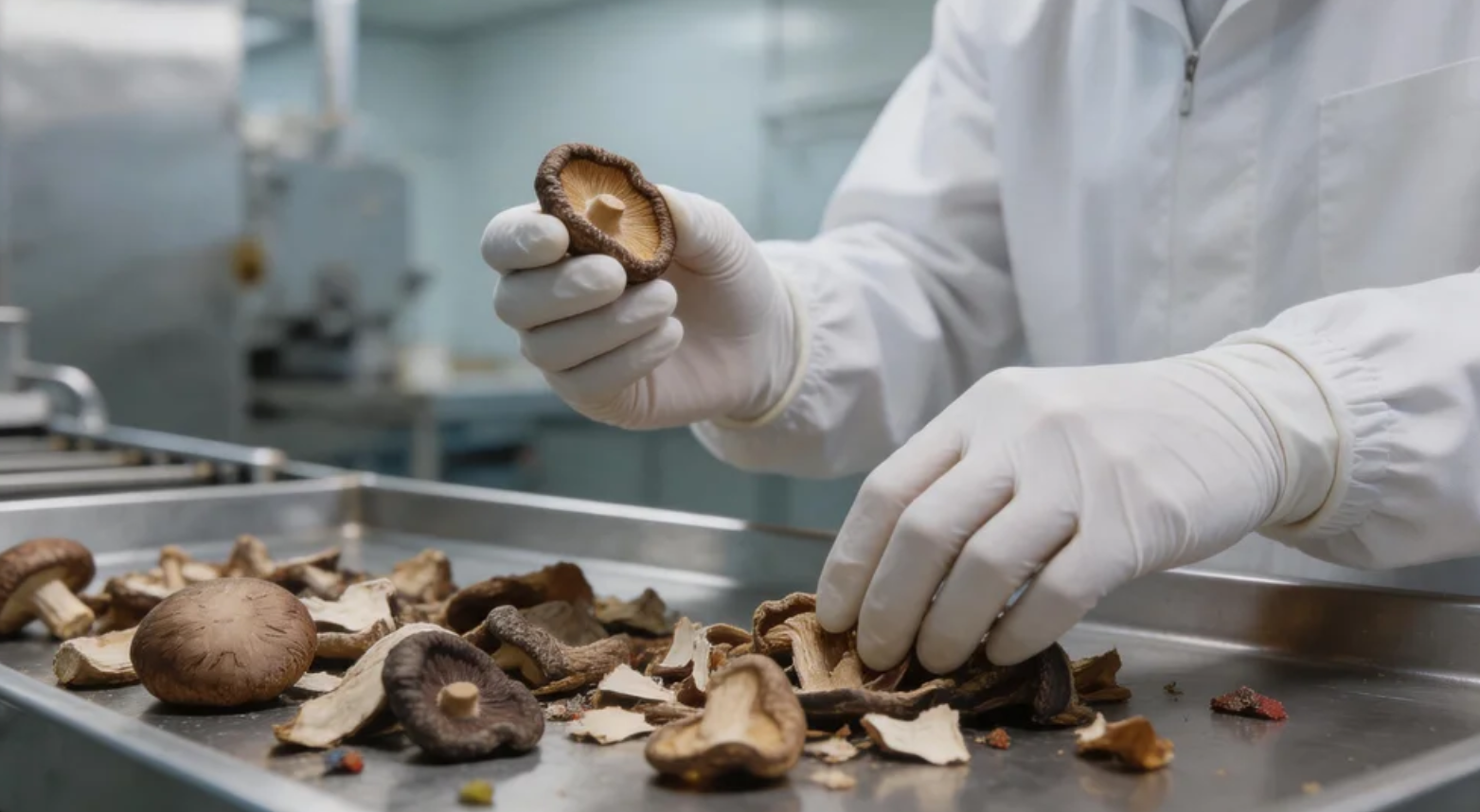
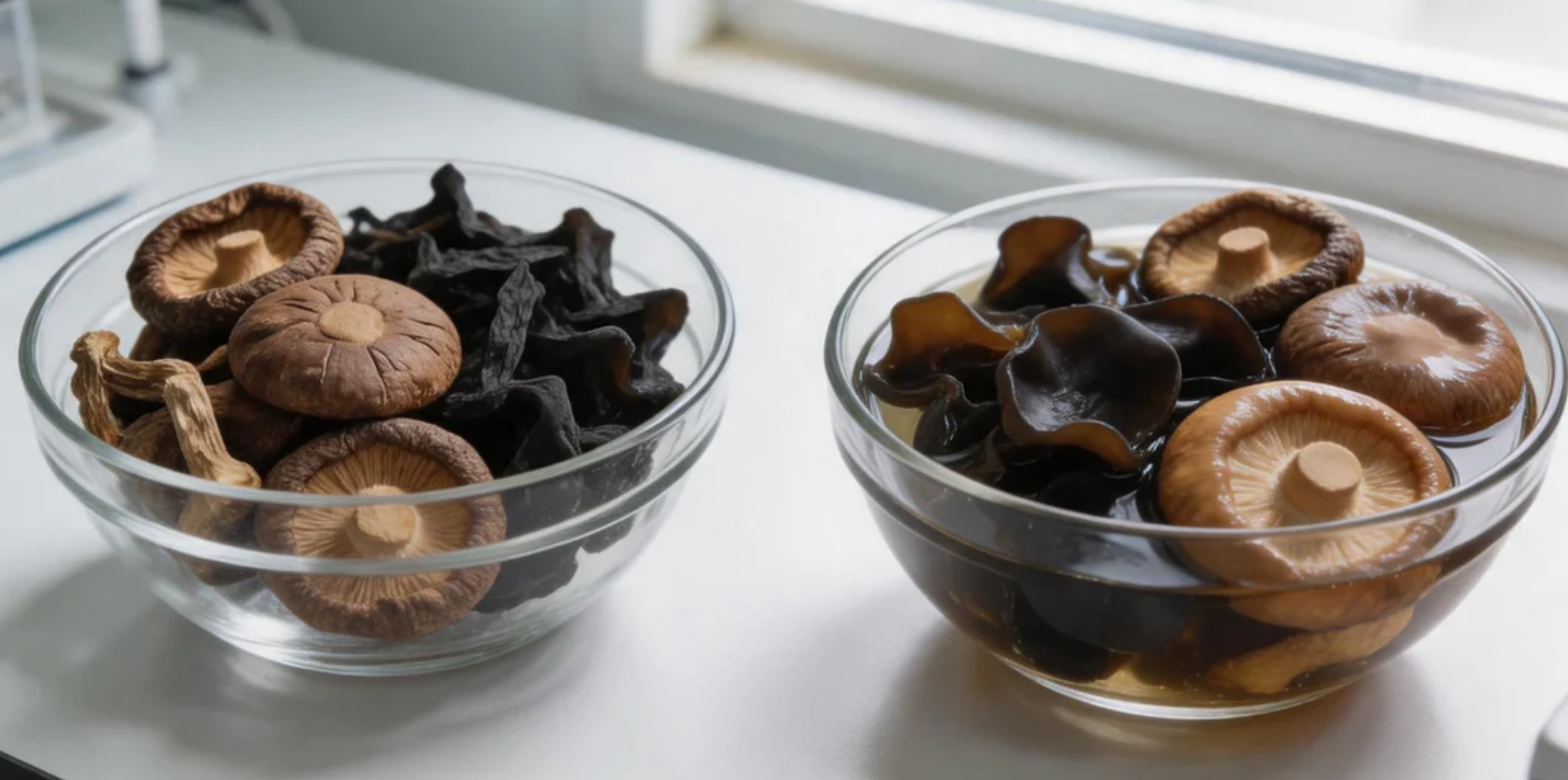
Get QuoteAppearance is the first quality signal when evaluating dried mushroom products. Buyers should check whether the mushrooms have a natural color, clean surface, consistent size, complete shape, and acceptable broken rate. For retail products, visual consistency is especially important because customers judge quality directly from the package. Different mushroom varieties have different appearance standards. Dried shiitake mushrooms may be evaluated by cap pattern, thickness, and shape integrity, while black fungus may be evaluated by color, thickness, cleanliness, and expansion performance. Buyers should ask suppliers to define clear grade standards before confirming bulk orders. Moisture content is one of the most important factors affecting dried mushroom quality. If the moisture level is too high, the product may face mold risk during storage or long-distance shipping. If the product is too dry, it may become fragile and increase breakage during transportation. Buyers should request moisture-related information and test samples under real storage conditions when necessary. Stable moisture control helps extend shelf life, reduce complaints, and protect product value during import, warehousing, distribution, and retail sales. Good mushroom products should have a natural and clean mushroom aroma. Abnormal odors may indicate poor drying, improper storage, contamination, excessive moisture, or packaging problems. Buyers should not rely only on photos; physical samples should be evaluated before placing a large order. For food brands and seasoning manufacturers, aroma consistency is very important because it directly affects the final product flavor. Sample testing should include both dry aroma and cooking performance whenever possible. Impurity control is a key quality factor for international buyers. Mushroom products should be inspected for dust, sand, stems, damaged pieces, foreign matter, and inconsistent particles. A supplier with good sorting and inspection capability can reduce risks before shipment. Broken rate should also be evaluated based on the product application. Whole mushrooms require lower breakage, while sliced mushrooms, diced mushrooms, powder, or soup mix ingredients may have different acceptance standards. Buyers should confirm acceptable limits before production. For many mushroom products, laboratory inspection is not enough. Buyers should also test real application performance. Dried mushrooms should be checked after soaking or cooking. Mushroom powder should be tested for particle size, solubility, flavor release, flowability, and formula compatibility. Food brands should evaluate whether the mushroom ingredient performs well in soup, seasoning, sauce, ready meals, instant food, drink powder, or functional food formulas. This helps avoid problems after mass production. Even high-quality mushroom products can be damaged by poor packaging. Buyers should check whether the supplier uses food-grade inner bags, vacuum packaging, moisture-proof liners, strong cartons, palletizing, and clear carton marks for export shipments. Packaging should protect the product from moisture, crushing, odor absorption, contamination, and long transportation cycles. For private label products, packaging should also support brand presentation and retail shelf requirements. Before bulk ordering, buyers should ask for product specifications, batch information, inspection reports, packaging details, shelf life information, and export-related documents. These documents help confirm that the supplier understands international procurement requirements. A reliable supplier should have a clear quality control process from raw material selection to sorting, processing, packing, storage, and shipment. This is especially important for importers, distributors, supermarkets, food manufacturers, and private label brands. Check appearance, color, size, and shape consistency Evaluate moisture level and shelf stability Smell the aroma and check for abnormal odor Inspect impurities, foreign matter, and broken rate Test rehydration, cooking, or formula performance Confirm packaging protection for export shipping Request product specifications and inspection documents Review supplier quality control process and batch consistency DASHANHE supplies dried mushrooms, black fungus, mushroom powder, mushroom soup mix, seasoning products, and customized packaging solutions with quality control support for global buyers.1. Check Appearance, Color And Shape Consistency
2. Evaluate Moisture Content And Shelf Stability
3. Smell The Aroma And Check For Abnormal Odor
4. Inspect Impurities, Foreign Matter And Broken Rate
5. Test Cooking, Rehydration Or Formula Performance
6. Review Packaging Protection And Export Readiness
7. Verify Quality Documents And Supplier QC Process
Mushroom Product Quality Evaluation Checklist
Need Stable Mushroom Product Quality For Bulk Orders?